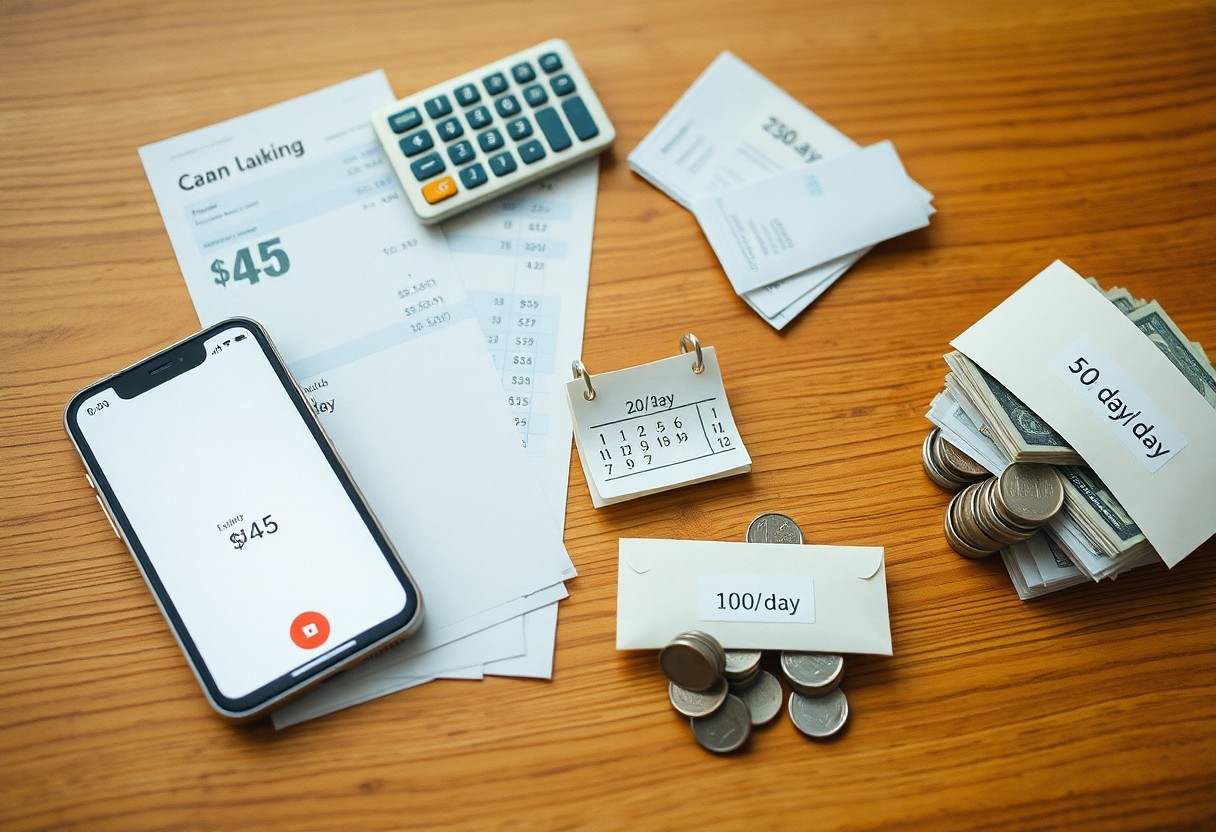
What Is a Safe Daily Spending Limit Based on Income?
With a clear method you can calculate a safe daily spending limit: start with your net monthly income, subtract fixed expenses and a set savings contribution (including emergency fund), then divide what remains by the number of days in the month to get a baseline daily allowance. Adjust for irregular costs, use 50/30/20 or your personal targets for imperatives versus discretionary spending, and track spending to refine your limit.
Understanding Daily Spending Limits
For a safe daily spending limit, you calculate your disposable monthly income, subtract savings targets and required debt payments, then divide the remainder by the month’s days so your everyday spending supports goals, covers irregular costs, and preserves an emergency buffer.
The Importance of Budgeting
Behind effective budgeting is the control you gain over cash flow: you prioritize imperatives, curb impulse purchases, align spending with goals, and create predictable room for savings and debt reduction so you avoid shortfalls and financial stress.
Factors Influencing Daily Spending
Budgeting your daily limit depends on multiple factors you must weigh:
- Income and its stability
- Fixed obligations (rent, utilities, loans)
- Savings goals and emergency contributions
- Irregular, seasonal, or one-off expenses
Assume that you review these monthly to adjust your daily limit.
This offers practical steps you can take to refine your daily cap:
- Track spending for 30 days to identify patterns
- Set a conservative starting cap and adjust gradually
- Automate savings and imperative payments
- Build a small buffer for unexpected costs
Assume that you perform a monthly review and tweak your cap based on actual cash flow.
Calculating Your Safe Daily Spending Limit
Assuming you want a simple rule, divide your monthly net income after taxes by 30, subtract fixed monthly expenses and targeted savings, then allow remaining funds for daily discretionary spending; this gives you a practical daily cap you can track and adjust as bills or goals change.
Income-Based Method
Between 50% and 70% of your net income allocated to vitals and savings leaves 30% to 50% for discretionary spending; to set a daily limit, multiply your net monthly income by your discretionary percentage, divide by 30, and adjust for irregular expenses so your daily allowance aligns with your overall budget.
Expenses and Savings Considerations
For accurate daily limits, subtract fixed obligations (rent, utilities, debt) and set aside savings targets (emergency fund, retirement) before dividing the remainder by days in the month; account for variable costs and create sinking funds so one-off expenses don’t derail your daily allowance.
Plus prioritize high-interest debt and build an emergency fund of three to six months’ basic expenses, automate transfers to savings and bills, and review your daily limit monthly so you can increase discretionary spending as debts fall or lower it when savings goals rise.
Recommendations for Different Income Levels
Some simple guidelines help you set a safe daily spending limit based on your income: cover vitals and a target savings rate first, allocate a fixed percentage for discretionary spending, and adjust for debt, dependents, and irregular expenses so you can maintain financial stability and adapt as your income changes.
Low Income
Along lower-income budgets, you should prioritize necessities, aim for a modest daily limit that preserves emergency savings and debt payments, use cash envelopes or apps to enforce the cap, and seek small, regular increases as your income or expenses change.
Middle Income
On a middle income, you can set a higher daily limit while allocating 10-20% of your income to savings and retirement; control discretionary spending with categories and ensure vitals and an emergency fund are fully funded before adding luxuries.
Different household costs and debts mean you should customize your daily cap: track spending for 30 days, model several scenarios (conservative, moderate, flexible), and pick the limit that protects your savings rate and avoids month-end shortfalls.
High Income
Before increasing your daily spending on a high income, you should max out retirement accounts, fund long-term goals, maintain at least six months of expenses in liquid reserves, then set a daily limit that lets you enjoy lifestyle upgrades without undermining future plans.
Consequently, you should calibrate luxury spending to a sustainable percentage of disposable income, maintain diversified investments, and review estate and tax strategies so your daily habits support long-term wealth preservation and family objectives.
Common Mistakes to Avoid
Once again you must guard against treating your safe daily limit as a rigid rule rather than a flexible guide; if you ignore changing income, irregular bills, or short-term goals, you risk overspending and undermining longer-term financial stability.
Underestimating Expenses
Around failing to include irregular, seasonal, or growing costs in your calculations, you expose your plan to shortfalls; you should track subscriptions, utilities, and occasional large purchases so your daily limit reflects real-world outflows.
Ignoring Savings Goals
An error you often make is omitting dedicated savings from your daily budget; without allocating for emergency and future goals first, your per-day allowance will be misleadingly high and leave you vulnerable to setbacks.
At the start of each month you should set automatic transfers to emergency and goal accounts before deciding daily spending, so your disposable income truly represents what you can spend and you avoid dipping into funds meant for your future.
Tools and Resources for Tracking Spending
Many digital and analog tools can help you monitor daily spending, from bank alerts and budgeting apps to spreadsheets and envelope systems; choose the combination that fits your habits, link accounts for real-time data if you want automation, or use manual tracking to heighten your awareness and prevent missed payments.
Budgeting Apps
To get the most from budgeting apps, pick one that syncs with your accounts, categorizes transactions automatically, lets you set daily or category limits, and sends alerts when you near a threshold; review suggested budgets weekly and adjust categories so the app reflects your priorities.
Spreadsheets and Financial Planners
Financial spreadsheets and planners give you granular control: you can build templates that track daily spending, separate fixed and variable costs, calculate safe daily limits, and project savings; because you set formulas and categories, the sheet becomes a living plan that adapts as your income or goals change.
It helps to start with a simple layout-income, fixed bills, variable spending, savings-and create formulas for daily allowances and monthly rollovers; you can copy monthly tabs, use conditional formatting to flag overages, secure files with passwords or cloud backups, and periodically export data to test different spending scenarios.
Adjusting Your Spending Limit
Now you should update your daily spending limit whenever your income, expenses, or goals change; recalculate using a safe percentage of net income, prioritize necessarys, boost emergency savings, and lower discretionary spending so your daily cap aligns with both short‑term needs and long‑term objectives.
Life Changes and Spending Adjustments
Changes in family size, job status, housing costs, or health needs require immediate adjustments to your daily cap; you should model best‑ and worst‑case budgets, trim nonnecessarys, and redirect windfalls to strengthen your financial buffer so you stay within sustainable limits.
Periodic Review of Financial Goals
For effective management, schedule quarterly or biannual reviews to compare actual spending against goals, adjust your daily limit for income or expense shifts, and apply simple allocation rules (like a 50/30/20 framework) to keep priorities balanced.
Considering reviews over several months helps you spot trends: track variances, set alerts for goal slippage, update projections for known upcoming costs, and coordinate with household members so your daily limit stays realistic and supports long‑term plans.
To wrap up
Drawing together, you can define a safe daily spending limit by using your net income: subtract fixed bills and targeted savings (including emergency and debt payments) from monthly take-home pay, then divide the remainder by the days in the month. As a practical guideline, keep flexible spending around 20-30% of net income, and adjust that percentage to align with your goals and risk tolerance.