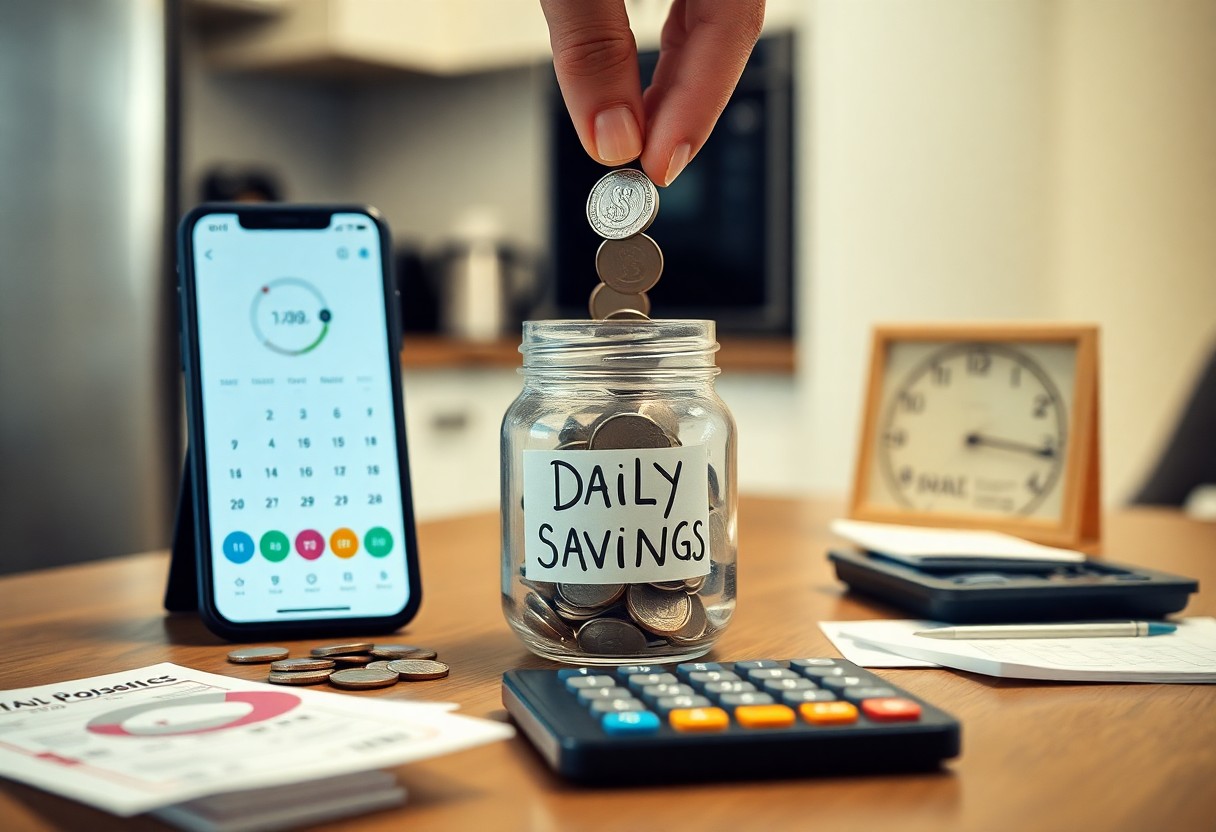
How Does Daily Budgeting Help You Save Without Noticing?
Most of your everyday decisions add up to meaningful savings when you use a daily budgeting habit: by allocating small, planned amounts for recurring categories, you prevent impulse overspend, spot wasteful patterns, and redirect spare cash toward goals without drastic lifestyle changes; tracking micro-allocations and reviewing weekly lets you automate transfers and adjust limits so saving becomes an unobtrusive routine that builds balance and momentum over time.
The Psychology of Budgeting
Before you think of numbers, your brain drives spending through habits, emotions, and perceived scarcity; daily budgeting reshapes those automatic responses by breaking goals into manageable choices, reducing decision fatigue, and giving you frequent micro-wins that reinforce saving without feeling like sacrifice.
Understanding Spending Habits
Psychology shows that triggers like boredom, stress, or social cues push you to spend; tracking daily expenses reveals patterns, helps you predict impulse moments, and enables you to redesign routines so your behavior aligns with your priorities rather than fleeting urges.
The Role of Mindfulness in Budgeting
Between purchases and outcomes, mindfulness gives you a pause to assess whether spending matches your values; practicing presence during transactions makes you more likely to choose intentional purchases and lets your daily budget guide small, consistent savings.
In addition, simple mindful practices-brief pauses before buying, noting emotions linked to purchases, and quick daily check-ins with your budget-help you spot triggers, adjust habits, and turn awareness into automated savings without relying on willpower alone.
Setting Up a Daily Budget
Some simple rules help you convert your monthly plan into a practical daily budget: divide your post-bill income by days, set a flexible daily spending cap, and allocate small buffers for variable costs so you avoid overspending without tracking every receipt.
Assessing Your Income and Expenses
To build a realistic daily allowance, you list your fixed income and vital expenses, average variable spending over several months, then subtract obligations to find disposable daily cash; this gives you a clear baseline to adjust for goals like saving, debt repayment, or irregular costs.
Utilizing Budgeting Tools and Apps
Daily use of budgeting apps helps you track each purchase against your allowance, categorize spending, and get instant alerts when you’re close to limits, making micro-adjustments simple so your small savings accumulate without effort.
But choose tools that sync with your accounts, let you set daily rules, and offer visual summaries; automate transfers to savings and set low-friction notifications so you avoid decision fatigue and let consistent small habits compound into meaningful savings.
Strategies for Effective Daily Budgeting
It helps you break monthly goals into manageable daily targets so you can track spending, curb impulse buys, and shift small amounts into savings without feeling deprived.
The Envelope System
Daily envelopes or digital equivalents let you assign cash to categories like meals and transport, so you see limits, avoid overspending, and consistently save small amounts.
Adjusting Budgets for Variable Expenses
For expenses that fluctuate, set flexible daily targets that average monthly costs, boost allocations before high-spend periods, and trim elsewhere to keep your budget balanced.
Budgeting for variable costs means tracking patterns, creating a sinking fund, and using rolling averages to smooth daily limits; you automate transfers, review allocations weekly, and reassign small surpluses to savings so you avoid shortfalls.
Tracking Progress and Making Adjustments
Unlike broad, occasional budgeting sessions, daily budgeting keeps you aware of small habits so adjustments feel natural; you track trends, trim categories incrementally, and redirect freed funds to your savings without friction.
Evaluating Monthly Spending
Along the month you compare totals to your plan, identify recurring leaks like subscriptions or impulse purchases, and reallocate overspending so monthly reviews turn daily data into measurable improvements in your saving rate.
Adapting to Changes in Financial Situation
An unexpected income change or new expense should prompt you to reassess priorities, adjust daily limits, and preserve imperative savings so your budget stays aligned with current needs.
Changes in employment, family needs, or goals require you to reset targets, build short-term buffers, and use daily check-ins to iterate until new spending patterns become stable and predictable.
Benefits of Daily Budgeting
Once again, daily budgeting makes saving effortless by breaking choices into bite-sized actions that nudge you to choose value over impulse, spot small leaks, and steadily grow your cushions without feeling deprived.
Increased Financial Awareness
Any daily check-in sharpens your financial awareness, helping you notice spending trends, cancel redundant subscriptions, and reallocate small amounts toward priorities so you make smarter choices each day.
Reducing Stress Around Money
Any steady daily plan reduces money-related stress by replacing uncertainty with simple rules and tiny wins, so you approach bills, savings, and surprises with greater calm and control.
And when you consistently update your daily budget, you can anticipate shortfalls, shift funds quickly, and acknowledge progress often, which lowers anxiety and builds durable confidence in your financial decisions.
Common Pitfalls to Avoid
For many people, small mistakes-like skipping irregular expenses, letting emotional purchases slip, or failing to adjust your plan-erode long‑term savings; you should design a daily budget that anticipates variability, tracks micro‑spends, and keeps saving sustainable.
Overly Restrictive Budgeting
Before you tighten every category, accept that extreme restrictions often provoke rebound spending; give yourself realistic daily limits, schedule intentional treats, and include a buffer so you can sustain saving without feeling punished.
Ignoring Non-Monetary Benefits
Across many budgets you may focus only on dollars and miss gains like reduced stress, time savings, or healthier habits; acknowledge these benefits so your daily choices reinforce well‑being as well as financial goals.
With a habit of noting non‑monetary wins-hours reclaimed, calmer mornings, better sleep-you can prioritize purchases that enhance life, quantify intangible returns, and let your daily budget protect both your money and your quality of life.
To wrap up
Hence, by allocating small daily limits you make saving habitual and frictionless: you prioritize spending, spot leaks early, and automate transfers so savings occur before you miss the money. Consistent micro-decisions reinforce discipline, curb impulse purchases, and let you build emergency funds and reach goals steadily. Over time, those modest daily surpluses compound into meaningful balances without drastic lifestyle changes.